Ahab, Jehoshaphat and the Arrival of the Assyrians (870-853BC)
Ref: 1 Kings 16-22, 2 Chronicles 17-18
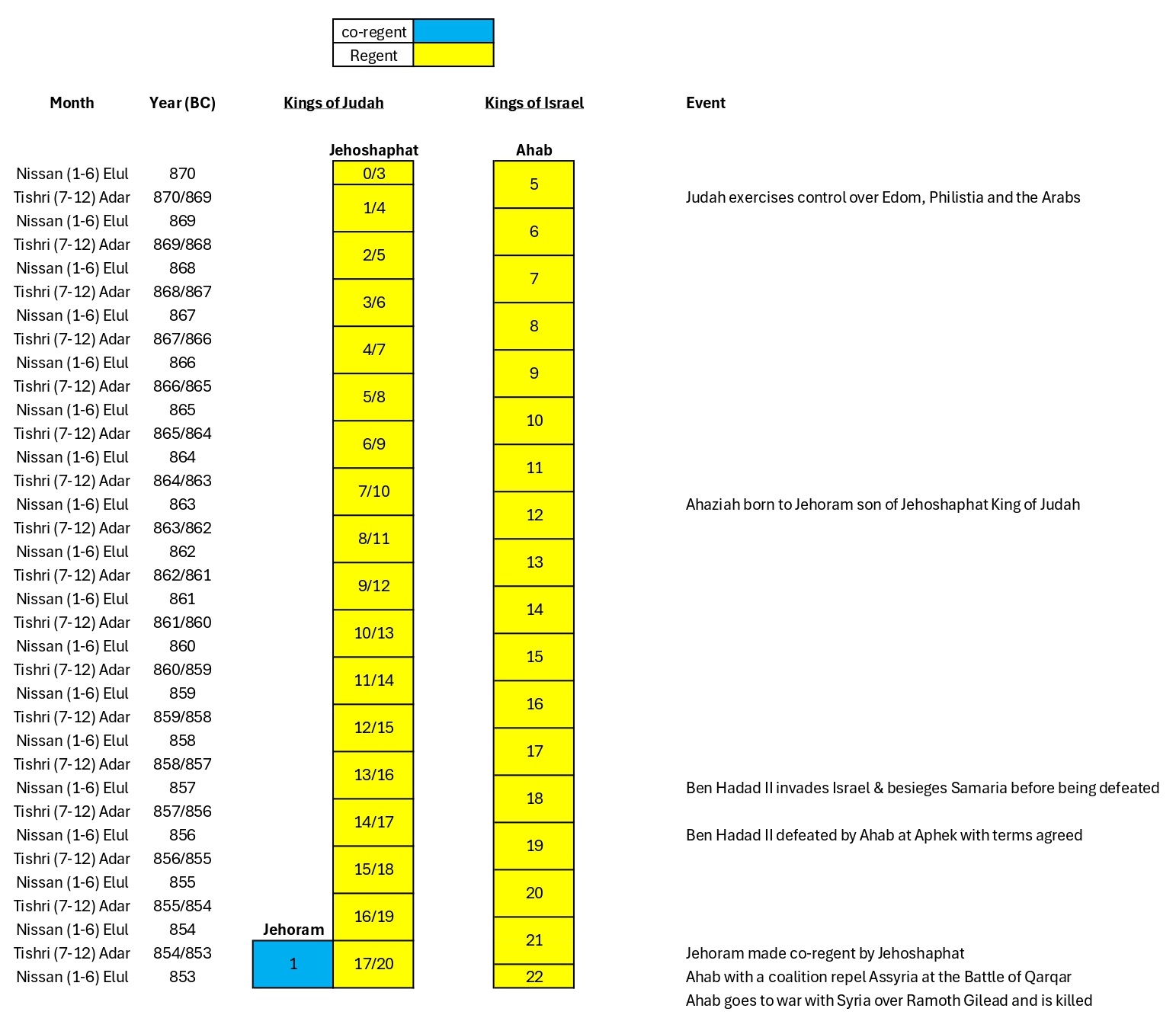
Following the turmoil of civil war Omri had established his dynasty over Israel. He had secured his borders on all sides and handed over a strong kingdom to his son Ahab. Ahab would embark on a building project establishing many cities and constructing his own ivory house. Meanwhile after the longest reign of a king of Judah (41 years), Asa had died and equally passed on a strong kingdom to his son Jehoshaphat.
Jehoshaphat Strengthens Judah
Jehoshaphat started his reign in similar manner to his father Asa. Firstly he strengthened himself against Israel: he amassed a large army, fortified the cities of Judah and set garrisons in the cities of Ephraim which his father had taken from Baasha. Secondly in the third year of his reign he sent leaders and priest throughout Judah to teach the book of the law. At this time Edom submitted to the authority of Judah and Jehoshaphat received tribute from both the Philistines and the Arabs. Jehoshaphat was secure in his kingdom moreover he made peace with Israel. Jehoshaphat entered into a marriage alliance with Ahab with his son Jehoram marrying Athaliah the daughter of Ahab and Jezebel. This was a politically shrewd move however morally questionable due to the idolatry associated with Jezebel.
Israel’s Spiritual State
Ahab ruled in Israel and Jehoshaphat ruled in Judah. But whereas Judah drew closer to God Israel drifted further away. Under Omri and Ahab in particular, Israel adopted the God’s of Tyre and Sidon. Ahab made Baal worship the state religion and built a temple for Baal in Samaria. Moreover Ahab persecuted the prophets of the LORD killing many. So bad was this the remaining prophets had to be hidden in order to preserve their lives.
Ahab would be confronted by Elijah the prophet who by the word of the LORD declared that it would not rain. For three years there was drought and there was a severe famine in Samaria. When Elijah returned he gathered all Israel to Mount Carmel for a showdown between YaHVeH and Baal. Elijah would prepare a sacrifice and the prophets of Baal would do likewise, with the God who answered by fire being the God of Israel. The LORD answered by fire, the prophets of Baal were slaughtered and Elijah turned the hearts of Israel back to the LORD. The famine was then over with the LORD sending rain. Meanwhile in Judah Ahaziah son of Jehoram and grandson of Jehoshaphat King of Judah was born in 863BC.
Israel’s war with Syria
Now Israel had been weakened by the famine and around the year 857BC Ben Hadad II invaded Israel and besieged Samaria. He offered unacceptable terms to Ahab requiring gold, silver, his wives and children and then above this for his men to enter into the city and take anything they chose. Ahab rejected these terms and Ben Hadad continued the siege preparing to destroy the city. Now following the word of the LORD Ahab sent out the 232 young leaders of the provinces to be followed by the remaining 7,000 men of Samaria. At this point the camp of Syria were getting drunk and seeing the young men come out gave orders for them to be taken alive regardless if they came out for peace and war. The young men however attacked the camp and were followed by the army. This unexpected attack caused panic with the Syrians fleeing and the Israelites pursuing. Ben Hadad got away but many of his army were slain. The following year around 856BC Ben Hadad mustered another army and attacked Israel in the plain near Aphek. But Israel was prepared for them. The two sides camped opposite each other for 7 days with the battle commencing on the seventh. Israel inflicted heavy losses with the Syrians fleeing into Aphek. Israel attacked the city bringing down the walls and Ben Hadad came out to plead for mercy. Ben Hadad promised to give back the cities his father had taken from Omri and to allow Ahab to set up a trading outpost in Damascus. Seeing a political advantage of a king in his debt, Ahab spared his life and made a treaty with Syria. In 854BC Jehoshaphat took his 23 year old son Jehoram and made him co-regent.
The Rise of Assyria
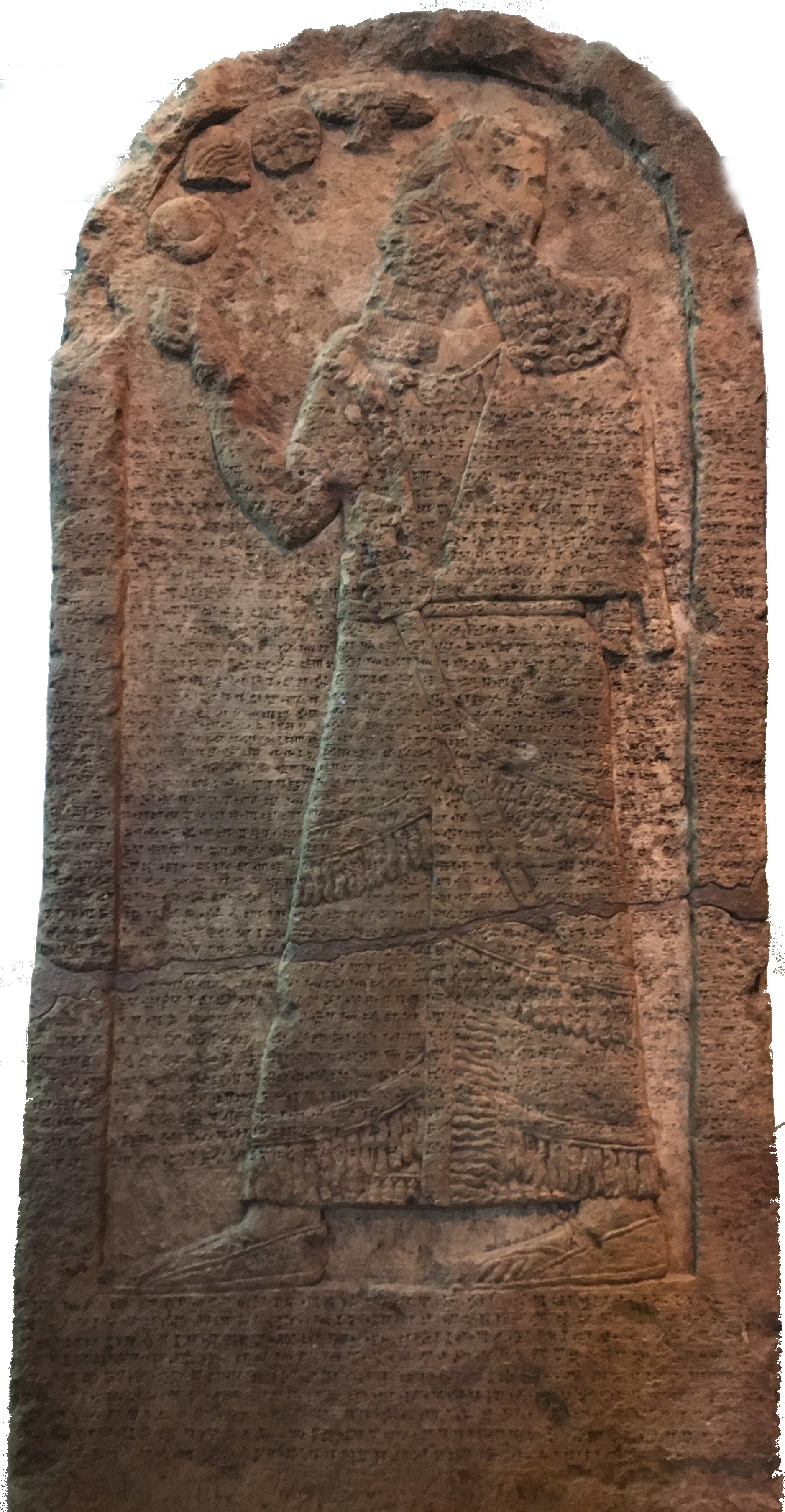
Much further to the North there was a superpower on the rise known as Assyria. Shalmaneser III came to power and from 858-855BC expanded his territory by crossing the Euphrates and bringing the kingdoms North of Hamath and between the Euphrates and the Mediterranean under Assyrian control. He conquered Bit Adini amongst other kingdoms with others submitting to his authority and paying tribute. With Assyria encroaching further South, King Irhuleni of Hamath sought help with the surrounding kingdoms. He desired to defend Hamath and in the process check the Assyrian expansion southwards. A coalition was formed between 12 nations which was led by Irhuleni of Hamath and Ben Hadad II of Syria. Included in the coalition was Ahab of Isreal who led the largest contingent of chariots. In 853BC Shalmaneser again crossed the Euphrates and journeying south attacked the northern territory of Hamath. After approaching the city of Qarqar he was met by the Southern Coalition. In his monuments and inscriptions Shalmaneser claims total victory, however the fact he didn’t campaign westwards over the next few years and later encountered the same coalition implies otherwise. The coalition was able to repel Assyria who retreated back across the Euphrates.
The Fall of Ahab
In the same year as the battle of Qarqar, Jehoshaphat came to visit Ahab in Samaria, who was preparing to make war on Syria. Though there was peace between Israel and Judah, the dynamic implies that Judah was the junior partner in the alliance. Despite Ahab sparing Ben Hadad II three years prior, the king of Syria had not honoured the arrangement. This is evidenced by Ramoth Gilead not being returned to Israel. Ahab proposed making war with Syria to reclaim Ramoth Gilead which was a strategic city in the Transjordan. Jehoshaphat agreed to go with him but also requested that a prophet of the LORD be consulted. Micaiah prophesied that Israel would be defeated and the people scattered, however Ahab and Jehoshaphat pressed on. Israel and Judah met Syria in battle however Ahab disguised himself not displaying his royal robes. Now Ben Hadad commanded his army to target the King of Israel in order to end the battle swiftly. However only seeing Jehoshaphat in his royal robes they mistook him for Ahab and surrounded him. Jehoshaphat cried out to the LORD and attempted to flee and realising he was not Ahab the Syrians didn’t pursue. However in the course of the battle Ahab was shot by an arrow between the joints of his armour and commanded his chariot driver to take him out of the battle. Ahab was propped up in his chariot facing the Syrians as he watched the battle intensify. By nightfall the Israelites had fled and Ahab had died.